For much of the last decade, technology investing has had a useful shorthand: find scalable software, recurring revenue and a product that can grow without a matching increase in cost. It remains a powerful model. But it no longer describes the full range of businesses where technology is creating durable value.
Some of the most compelling companies are not defined by software alone. They sit where technology meets a real operating environment: a service that has to be delivered, a supply chain that has to respond to exceptions, a customer relationship that has to earn trust, or a complicated decision that has to become repeatable.
In those businesses, technology is not less important because it is only one part of the system. It is more consequential. Its value comes from the way it improves the whole system around it.
That is the perspective founder-led capital needs to bring to the table.
The software category is often too narrow
Categories help investors compare companies. They make markets legible, create common metrics and establish a language for scale. But categories can also obscure how a company actually creates value.
A business may look like software at first glance, while its advantage is really built through a combination of product, operational knowledge, distribution, brand and trust. It may use AI to organise a fragmented workflow, but need deep domain context to make its output useful. It may coordinate a physical service, where the digital experience matters only because it makes delivery more reliable. It may modernise an established sector in which progress is measured not by clicks, but by a better customer outcome.
The relevant question is therefore not simply, “How much of this company is software?” It is: “Does the technology make a larger system work better — and can that advantage compound?”
This distinction matters across technology, logistics, property, mobility, procurement, education and consumer services. In each case, a strong product must earn its place inside someone’s daily work or life. It has to improve a decision, remove friction, create clarity or make an outcome more dependable.
Technology earns its value through the operating layer
The operating layer is the set of workflows, relationships, information, permissions and decisions that turns a product into a result for a customer.
It is easy to underestimate this layer because it is rarely captured in a product demo. A demo can show a clean interface; it cannot always show what happens when a supplier misses a deadline, a customer’s requirements change, an operational handoff fails or a team has to make a judgement call with incomplete information.
That is where technology proves whether it is an addition to a process or a genuine improvement to one.
In logistics, visibility is valuable when it helps a team respond when freight changes course. In property, a digital workflow matters when it supports reliable service and better decisions across a local operating environment. In mobility services, the interface is only the beginning; the customer experience is determined by whether the service arrives, communicates clearly and solves the problem. In procurement, software becomes meaningful when it helps teams move from supplier discovery to a sound decision with speed, transparency and accountability.
These are not exceptions to technology investing. They are an increasingly important expression of it.
Four questions for a broader form of underwriting
When a company combines technology with real-world execution, four questions help reveal whether it has the foundations for durable value.
Does the technology improve a meaningful workflow?
The strongest products are connected to work that matters: a recurring process, a difficult handoff, a delayed decision or an inconsistent service experience. A feature can be impressive without becoming essential. A workflow improvement has a clearer route to adoption, retention and economic relevance.
What must be true outside the product for the customer outcome to happen?
The answer may include people, partnerships, permissions, supply, local knowledge or physical delivery. These factors should not be written off as “non-tech”. They are often the context that makes a technology product more useful and more difficult to replicate.
Does the business build trust as it scales?
Trust is not a communications exercise that follows growth. It is an operating asset. Customers, partners and teams need to understand what the company will do, how it manages exceptions and whether its standards hold when the business is under pressure.
Can the founder make the system learn?
The best founders do not only add customers to an existing product. They make the business improve through each completed process: through data, integrations, customer behaviour, supplier relationships and practical lessons that become harder for a new entrant to recreate.
Founder-led capital can assess the whole system
Institutional investment disciplines — clear metrics, repeatable categories and comparable financing benchmarks — are valuable. But an opportunity that is building value across several layers needs to be assessed across several layers as well.
Founder-led capital can take a more integrated view. It can look at how product, operations, positioning, team and distribution reinforce one another. It can ask what a business needs to become after the next phase of growth, not just what it looks like during the current reporting period. And it can treat operational complexity as something to understand and design around, rather than automatically as a reason to step back.
This is not an argument for less discipline. It is an argument for applying discipline to the full business.
At Veyra Capital, we look for companies where capital, product, brand and operational discipline meet. Our investment focus spans technology and digital infrastructure, consumer and lifestyle businesses, education, real estate and selected impact initiatives. The sectors differ, but the underlying test is consistent: can this business become more useful, more resilient and more valuable over time?
Complexity is not the opposite of scale
Operational complexity can become a liability when a company builds a service that is too bespoke, too dependent on individual effort or too difficult to repeat. But complexity and poor design are not the same thing.
Technology can standardise the right parts of a complicated process while preserving human judgement where judgement matters. It can organise information, create accountability, automate repetition and make an experience feel simpler to the customer than the system required to deliver it.
That is why technology-enabled operating businesses deserve serious attention. Their defensibility may not come from an interface alone. It may come from the workflow they improve, the context they accumulate, the relationships they earn and the quality of execution they can maintain over time.
Software remains central to modern business building. Looking beyond software is not a rejection of it. It is a recognition that the most enduring companies often use technology to improve a much larger system — and that the value of that system must be understood in full.
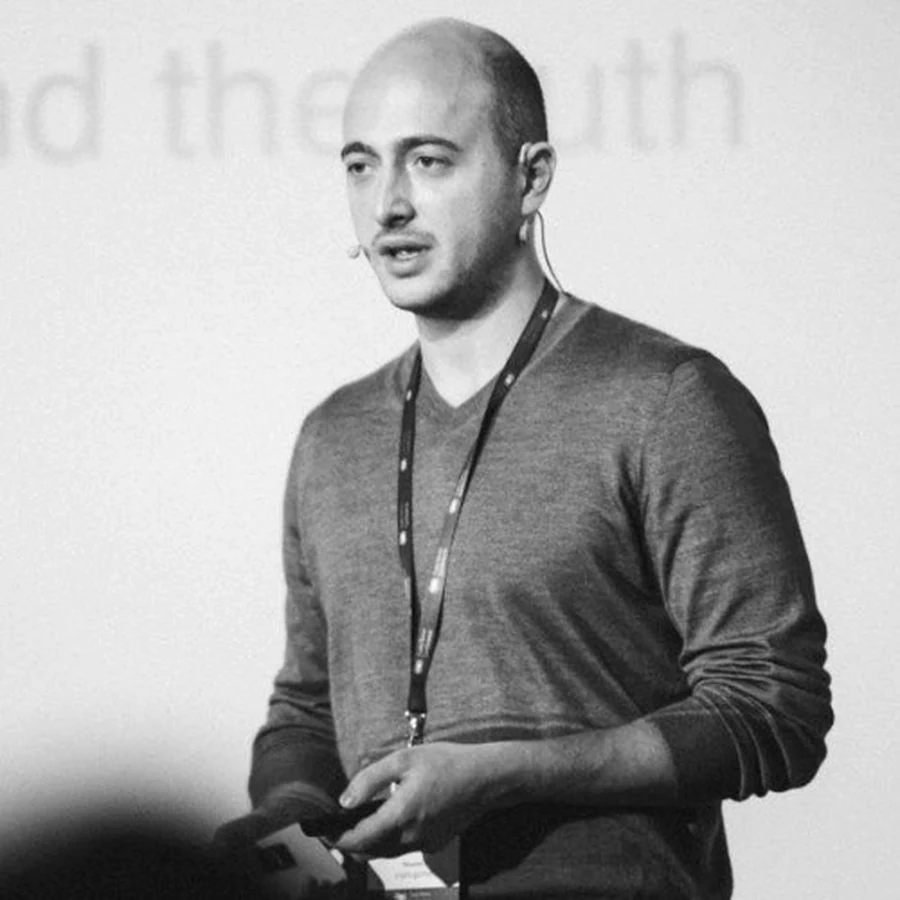
Konstantin Katsev
Konstantin Katsev is a Venture Partner at Veyra Capital, a founder-led private investment office backing businesses across technology, digital services, consumer markets, education, real estate and selected impact initiatives. His experience spans software, digital ventures, consumer businesses, media, wellness, education and private investment.
Disclosure: This article is provided for general informational purposes only. It does not constitute investment, legal or financial advice, and does not make any claim regarding the performance of any company or investment.